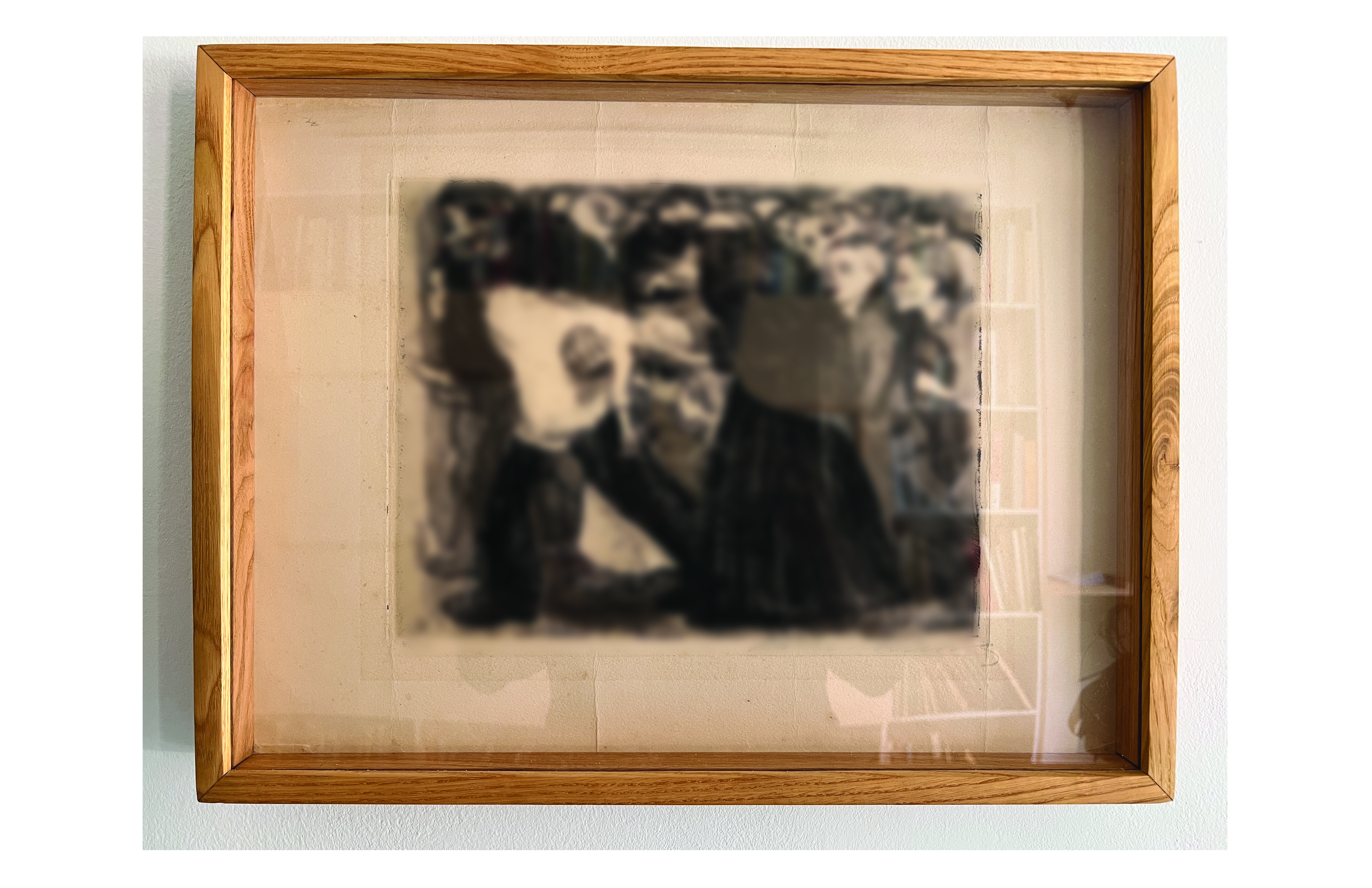
…Private Ernest Bryant, twenty-six, of the 761st Tank Battalion — the Black armored unit known as the "Black Panthers" — moved through a village near the Czech border in the final spring of the war. He was the second-eldest of four brothers from the Kinloch "bottom" outside St. Louis: Ernest, Earl, Lester, and William. One brother died in the war; Earl, in the infantry, was wounded by mustard gas in 1942–43 and carried the scars the rest of his life. Before shipping out, Ernest had gone to California to be near his parents; his girlfriend, Dorothy Newton, left Lincoln College to join him there before he was sent overseas by ship to Germany. Their first son was born at Fort Leonard Wood, Missouri.
Family telling holds that during the war's final weeks, Ernest and his unit came upon a family hidden in a farmhouse cellar near the Czech border. While scouting the wreckage, Ernest heard faint movement beneath the floorboards. He raised his weapon, signaled the other men to hold back, and lifted a loose plank. In the darkness below, three people looked up: a gaunt man, a woman with sunken eyes, and a little girl clutching a ragged doll.“wir sind Juden // (a gruff cough) we are Jews,” the man said, in German-accented English. “Please… we mean no harm.”
“We are American,” Ernest said. “you’re safe.” The Levi family had been hiding in that cellar for nearly two years, surviving on scraps brought by a sympathetic farmer who had since vanished. Ernest didn’t wait for permission—he gave them a half of the chocolate from his Field Ration D, scrounged blankets, and helped arrange their safe passage with the Red Cross when it finally arrived.
On the day they left, Isaac Levi pressed a small, folded bundle into Ernest’s hand—wrapped in cloth and folded four times across its width Issac Levi didn’t say what the item was. “It isn’t much,” Isaac said, “but it meant something to us. It still does.” “I can’t take this,” Ernest said, looking down at the package. “You’ve got so little left.” Isaac shook his head. “It should go with someone who saw us as people.”
The signature at the bottom read: Käthe Kollwitz. Only later would her younger brother identify the German title: Überfahren—Run Over…