May 16 – June 16, 2026
Reception: May 16, 2026 | 18:00 – 21:00
Kote Afkhazi 18/2
Tbilisi, Georgia
Related events:
May 23, 2026 18:30 >> The Weavers, (1927) Dir. Frederic Zelnik
May 30, 2026 18:30 >> Metropolis, (1927) Dir. Fritz Lang
June 6, 2026 18:30 >> Lecture and conversation with artist Wayne Hodge
June 13, 2026 18:30 >> Lecture and conversation with curator Ernest A. Bryant III
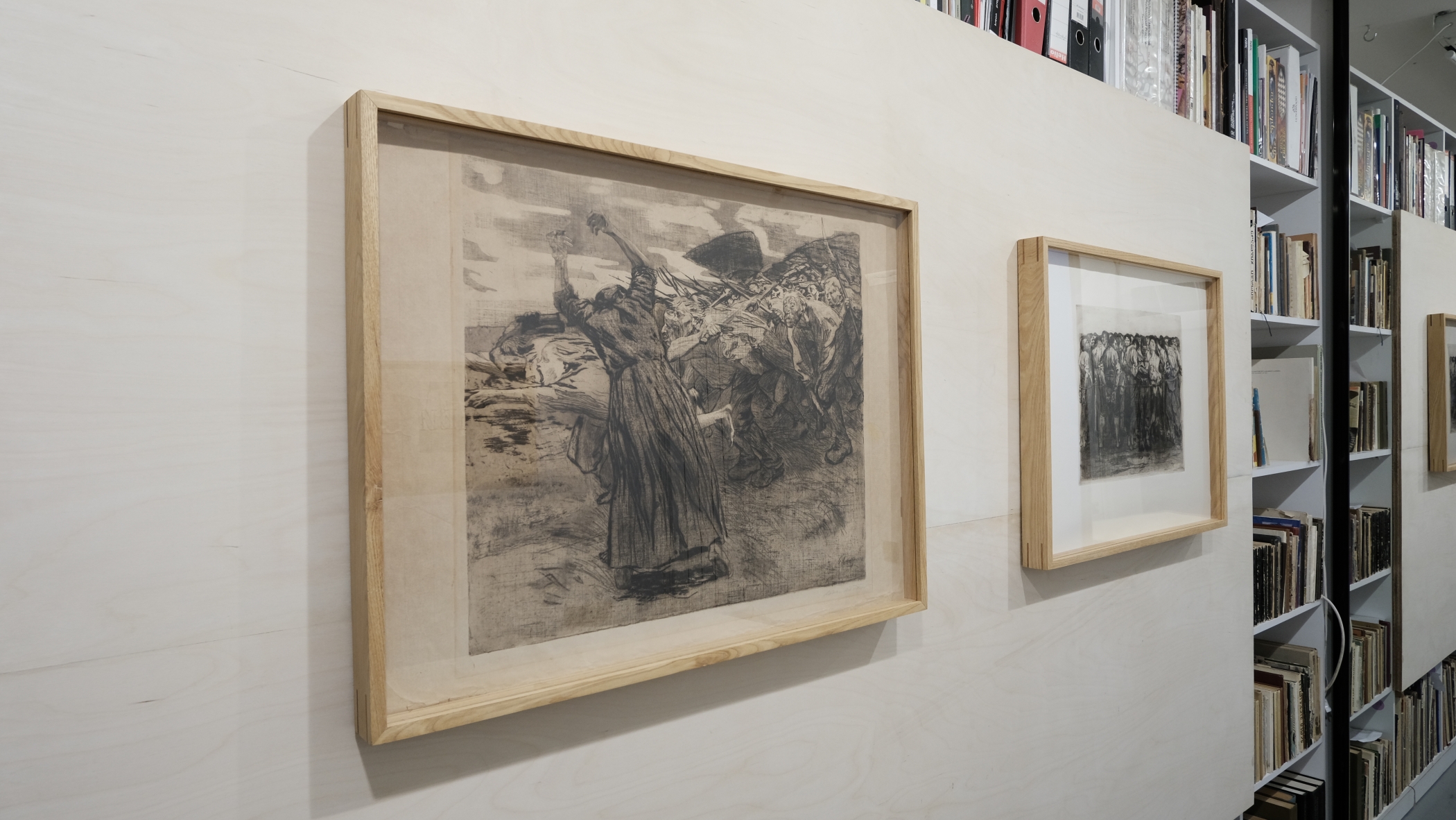
Powerless in the Mist of the Juggernaut assembles etchings by the German artist Käthe Kollwitz (1867–1945). Artworks made between 1899 and 1910, when Europe stood at the edge of catastrophes it could not yet fully name, will be exhibited in Tbilisi, Georgia. These works have been assembled for appreciation, pedagogy, potential clarity and critique.
This modest exhibition is the first time artworks by Käthe Kollwitz have been exhibited in Tbilisi, Georgia. They arrive here not from a museum vault, but from a personal ‘teaching collection’—objects that have spent the past three years as the subject of conversations with artists and students in America, and now Tbilisi, Georgia. These works have served as inspiration, aesthetic reference, opportunities for close looking, essay production, as primary sources, evidence, provocations and material—yes material. That origin matters. These prints have been looked at intensely, argued over, and sat with in silence. They carry that accumulated attention— from the hands of Kollwitz… to the gaze of over eighty students and now to the public in Tbilisi, Georgia.
Kollwitz spent her life making art about people whose lives were largely invisible to or ignored by many artists. She lived among the working poor of Berlin, and the proximity of that world proved essential. “Beauty, for Kollwitz, was not prettiness; it was weight and dignity in truth.” In her hands, printmaking, with its pressure, resistance and capacity to circulate images, suited a practice committed to producing images of the lives of the common working people.
This exhibition poses questions of the past in the quaking shadow thrown upon the past by current events: have we learned as witnesses…not observation from the subdued safety of a centuries-long gap, but bound through implication from those moments and these—the body standing at the edge of the crowd, the person holding the image, the student asked to write about what they see, the digital pedestrian eyeing catastrophe?